Arabic Vocabulary Lists
Learning Arabic vocabulary is one of the most important aspects to help you become fluent in the language. A strong vocabulary carries you further in everyday conversation than perfect grammar does, and most learners find that the first few hundred high-frequency words unlock the majority of what they read and hear.
Below are the vocabulary lists created by OpenArabic. Each list is available in two formats: a plain file you can print or import into any tool, and a ready-made Anki deck. We recommend the Anki decks – spaced repetition is the most reliable way to move words into long-term memory, and reviewing a deck for ten minutes a day beats a long weekly cram session. Where a list covers dialects (such as the Al Kitaab list with Syrian and Egyptian words), learn the Fusha form first and add the dialect forms once the word feels familiar. If you are looking for vocabulary apps, frequency dictionaries, and other third-party tools instead, see our Arabic vocabulary resources page.
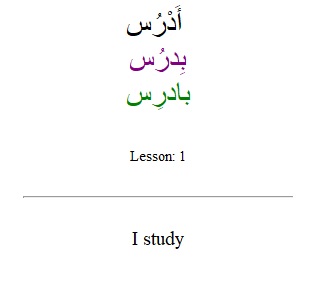
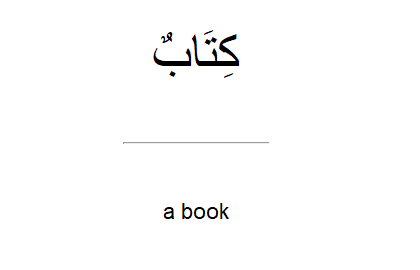
This vocabulary list is centered around the book A New Arabic Grammar by Nahmad and Haywood. This is regarded as a very good book for learning Arabic Grammar.
View the A New Arabic Grammar vocabulary list
Vocabulary Formats:
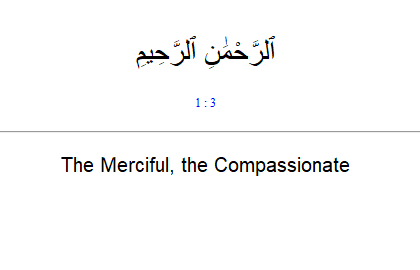
All Ayat of the holy Quran translated in English with the Surah and Ayah numbers. Official translations provided by Abul Ala Maududi and resources from Tanzil.net.
View the Quran vocabulary list
Vocabulary Formats:
Frequently asked questions
How many Arabic words do I need to know?
Around 500 high-frequency words cover most everyday conversation, and roughly 2,000–3,000 let you read newspapers comfortably. The Al Kitaab list (364 words) and the A New Arabic Grammar list (2,600 words) map well onto those two milestones.
Should I learn vocabulary with or without the short vowels?
Learn each new word with its short vowels (tashkeel) so you internalize the correct pronunciation, then practice recalling it without them – written Arabic almost never includes the vowel marks, and reading unvowelled text is a skill of its own.
What is the best way to review these lists?
Import the Anki deck and review daily. Spaced repetition schedules each word right before you would forget it, which is far more efficient than re-reading a printed list. Ten to fifteen minutes a day is enough to work through the Al Kitaab deck in about a month.