Al Kitaab Part One (Al-Kitaab fii Ta'allum al-'Arabiyya) is the textbook most American university Arabic programs use with first-year students, and it is famously vocabulary-heavy: each chapter opens with a block of new words, and the drills that follow assume you already know them.
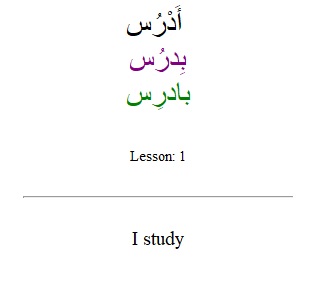
This page collects the complete vocabulary of Part One: 364 words with English translations, each tagged with its lesson number. Each entry appears in three varieties of Arabic - Fusha (Modern Standard Arabic), Syrian, and Egyptian - matching the textbook, which teaches both dialects alongside the formal language. The dialect columns are filled in wherever the spoken form differs from Fusha, so a blank means the word is the same. Audio recordings come with the book and on the publisher's companion website; use them so you learn each word's pronunciation, not just its spelling.
The single biggest upgrade you can make to an Al Kitaab course is learning each chapter's words before your class gets there. The book activates vocabulary through drills and conversation rather than introducing it gradually, so students who arrive knowing the words spend class time speaking instead of decoding.
How to use this list with the textbook
Work one lesson ahead. Before your class starts a new chapter, filter the list by the lesson column and drill those words until you can recognize each one and recall its meaning. Recognition is enough to follow the drills; active command builds during the week the class spends on the chapter. The Anki deck below handles review scheduling; the CSV suits a different flashcard app or a printed sheet.
Review with the audio playing - printed Arabic hides most short vowels, so reading a word silently teaches you only a guess at its pronunciation. As for the dialects: if your class holds you responsible for one, learn the Fusha form plus that dialect's form and let the third column sit as passive recognition. Memorizing all three actively roughly triples the workload for little payoff in a first-year course.
You can use the vocabulary list in the following formats:
Frequently asked questions
Do I need to learn all three dialect versions?
No. Most programs that teach from Al Kitaab hold students responsible for Fusha plus one dialect, so drill those two columns and treat the third as passive recognition. If you are studying on your own, pick the dialect of the region you care about; every learner needs the Fusha column, since the reading and grammar exercises are built on it.
Is Al Kitaab good for self-study?
It can work, but the series was designed for classrooms. Many activities assume a partner, and the grammar explanations expect an instructor to fill in gaps, so self-learners should lean on the companion website audio and consider adding a tutor for speaking practice. Pre-learning each chapter's vocabulary matters even more without a class to catch you up.
Which Al Kitaab edition does this list match?
The list was compiled from the third edition of Al Kitaab Part One, the edition that presents vocabulary in Fusha, Syrian, and Egyptian. We have not checked it word for word against other editions; chapter contents shifted between them, so second-edition users should expect most words to match but not the same lesson numbers.